
29 August - 10 October 2026
Show exhibition essayRobert Klippel’s Editioned Bronzes
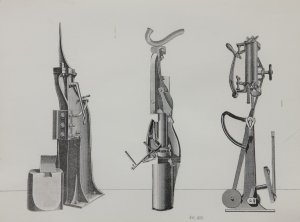
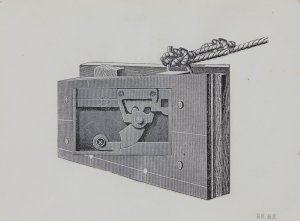
In around 1963-64, Robert Klippel salvaged a collection of wooden machine patterns—likely used for sand-casting components for shipbuilding—from the Goldsbrough Mort Building in Balmain. Klippel found further pattern pieces in the years that followed across industrial sites in Sydney’s inner west and south. Klippel’s contemporary, Colin Lanceley (1938-2015), had his own cache of the patterns, and found immediate use for these objects in his sculptures and sculptural paintings from the mid-1960s. However, Klippel waited nearly twenty years before he found the perfect opportunity to include them in his work.
Until the 1980s, Klippel rarely worked at a large scale. He was not fully satisfied with previous efforts to fabricate enlarged versions of his sculptures in the early-1970s, but a commission from James Mollison, inaugural director of the National Gallery of Australia, to create eight sculptures for the Gallery’s opening in 1982 provided the impetus Klippel needed to solve previously encountered problems.
Klippel’s revelation was that the wooden patterns would allow him to create larger works while still allowing him to apply each element directly by hand. There would be no need for fabrication, with each sculpture created at its final scale. In his 1983 monograph on Klippel, James Gleeson wrote that the sculptor “surrendered to a sudden impulse to work exclusively with wooden patterns. Klippel found that eight pieces came quite effortlessly, bound together and buoyed up by a single creative burst.” [1]
To complete the commission, Klippel engaged Meridian Foundry in Melbourne, to cast each wooden assemblage into bronze. Each work was carefully disassembled, cast and reassembled, leaving each sculpture with two incarnations - one in wood and the other in bronze. Klippel settled on an edition of six bronzes with artist proofs and left detailed patination notes about each sculpture cast with Meridian, ensuring that the artist’s specifications could be replicated across the full edition.
The original eight sculptures for the National Gallery were individually numbered in Klippel’s usual manner, No. 365 to No. 372. Collectively, they have become known as the Group of Eight (1981, cast 1981-82). Klippel’s friend and dealer, the late Geoffrey Legge (1935-2025), referred to them poetically as the Reflection Pool Sculpture for their position in the Gallery’s sculpture garden.
Following the Group of Eight, the epiphany provoked by the wooden patterns inspired Klippel’s practice for the remainder of the 1980s. The same year as the Group of Eight were cast, Klippel created a cohesive group of a few dozen wooden assemblages that were cast into bronze, that relate directly to the initial eight. These works are at scales ranging from pieces for mantlepieces and tabletops, through to taller sculptures at a human scale. With their own character, one resembles timing belts moving around a series of gears (No. 430), another a compact phonographic device (No. 442), or an intricate mechanism for a bell tower (No. 444). But it is clear in each case that Klippel relies on our instinct to interpret his sculptures as functional objects, before redirecting our focus to the patterns’ aesthetic qualities alone.
Some of the bronzes—such as No. 448 (Birdbath)—are widely regarded as among Klippel’s greatest works, perfectly composed arrangements from what Deborah Edwards has called his "language of forms" [2] that evoke a sense of the numinous in nature and machinery. It is no coincidence that these exceptional works were made through a process that perfectly captured Klippel’s interests in the cycles of our world, taking objects that were once directly used to create functional machines, and applying them instead to the creation in bronze of monuments to nature and industry.
Jack Howard, August 2026
[1] James Gleeson, Robert Klippel, Bay Books, Sydney, p. 413.
[2] Deborah Edwards, Robert Klippel, Art Gallery of New South Wales, Sydney, p. 15.

No. 448 (Birdbath) 1982
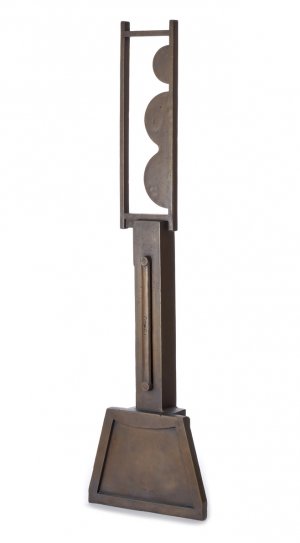
No. 667 1987
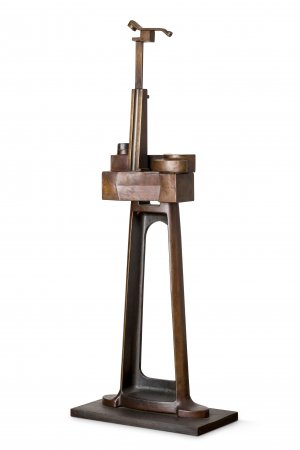
No. 700 1987
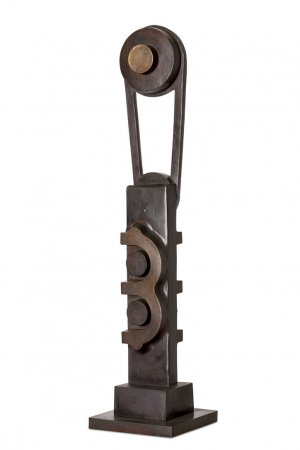
No. 430 1982
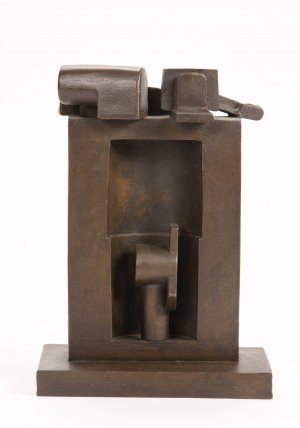
No. 427 1982
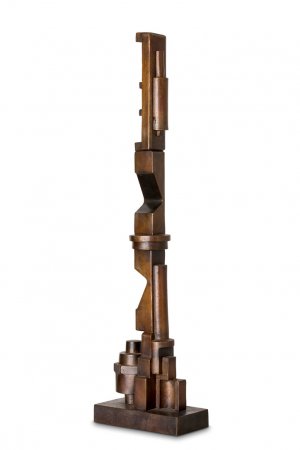
No. 443 1982

No. 964 1987
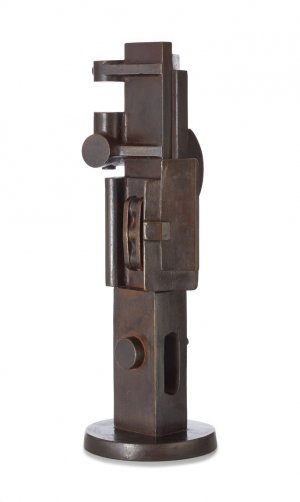
No. 440 1982

No. 444 1982
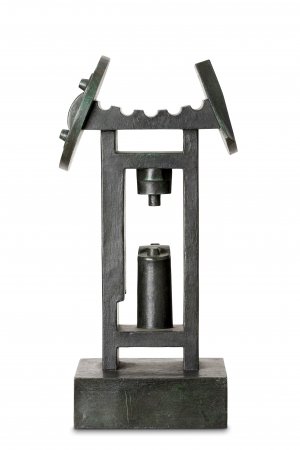
No. 442 1982
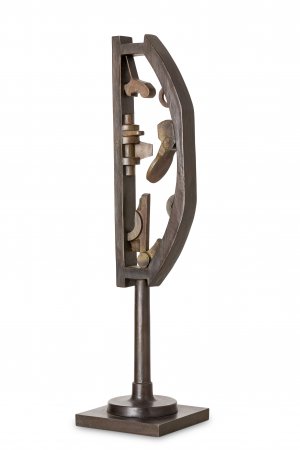
No. 433 1982
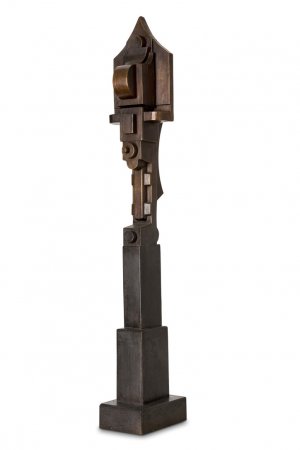
No. 454 1982
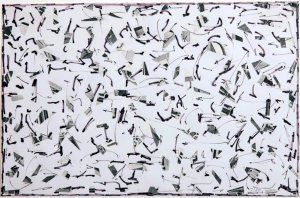
AKD0710 1980
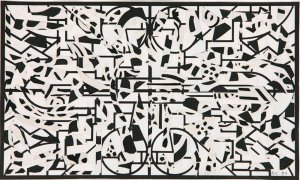
AKD0850 1983

AKD612 1989
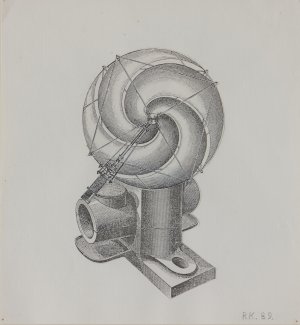
AKD593 1989
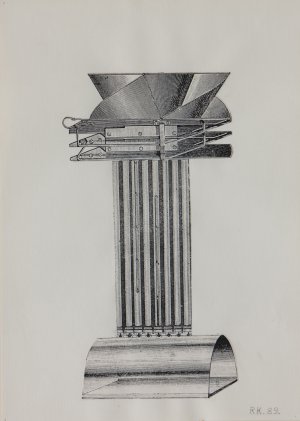
AKD580 1989
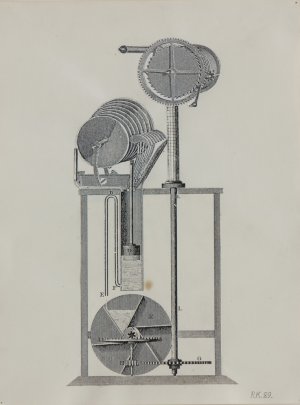
AKD569 1989
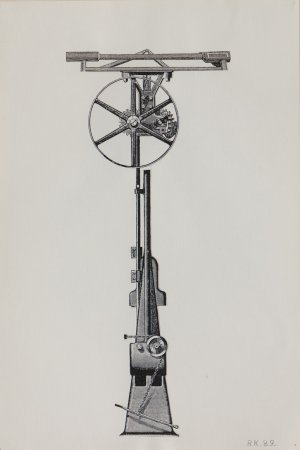
AKD565 1989
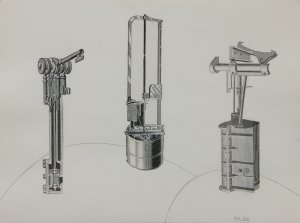
AKD614 1989
AKD618 1989
AKD568 1989